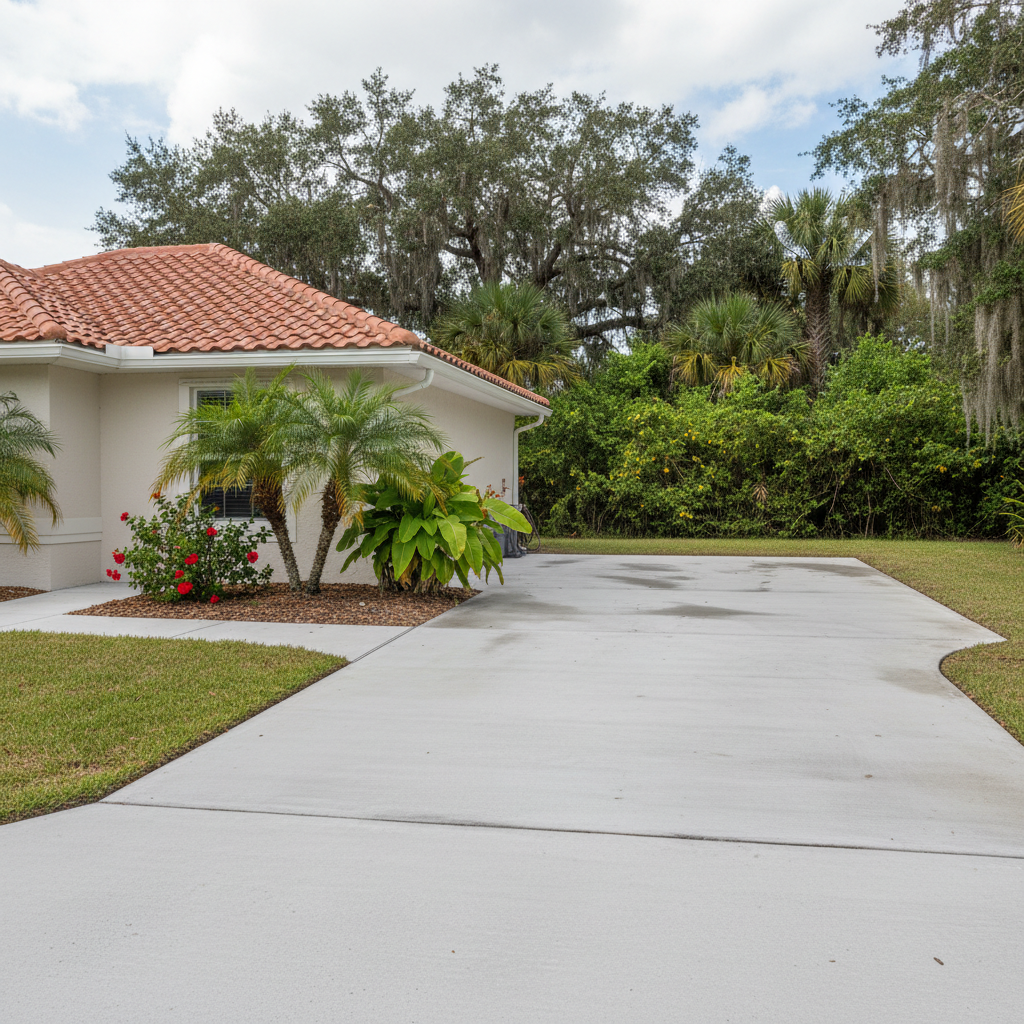
Ever watch a fresh driveway pour turn into a race against a sudden South Florida thunderstorm? Here in Miramar, the weather dictates everything we do on a job site. Between the blazing summer heat, intense humidity, and soggy rainy seasons, handling concrete is not just a matter of mixing cement and water. You have to understand how our local climate behaves if you want a slab that lasts.
The Dual Threat of Miramar Heat and Rain
Most people think concrete dries out, but it actually cures through a chemical reaction called hydration that requires steady moisture. Down here in Broward County, the combination of high heat and scorching sun makes surface water evaporate much too fast. When temperatures spike in the nineties, concrete sets too quickly, which usually leads to ugly surface cracking and weak structural strength. On the flip side, we deal with near-daily afternoon downpours from June through September that can pit or wash out a fresh finish before it has time to set. Soil conditions across Miramar also shift from dry sandy patches to heavy marl and moisture-retaining clay, making a stable sub-grade essential before any truck rolls onto your property.
When to Schedule Your Concrete Project
Timing your project right saves you from costly repairs down the road. If you have flexibility, aim for the drier, milder months between late fall and early spring—roughly October through April. During this window, humidity is lower, temperatures are manageable, and you will not dodge afternoon squalls every single day. If you are tackling a patio or driveway replacement during the peak of summer, Miramar Concrete Co always schedules pours for the crack of dawn. Getting the mud down early gives it precious hours to set before the peak heat and afternoon storms hit.
Protecting Your Investment Year-Round
Once your new slab is down, do not just forget about it. Concrete needs proper care during its critical 28-day curing window, especially under our relentless sun. Applying a quality curing compound right after finishing helps seal in vital moisture. Keeping up with simple maintenance like sealing decorative or stamped surfaces every couple of years prevents moisture intrusion and keeps mold and mildew at bay on shaded lanais and pool decks. Plan your timelines wisely, watch the radar, and your concrete will stand strong against whatever South Florida throws at it.