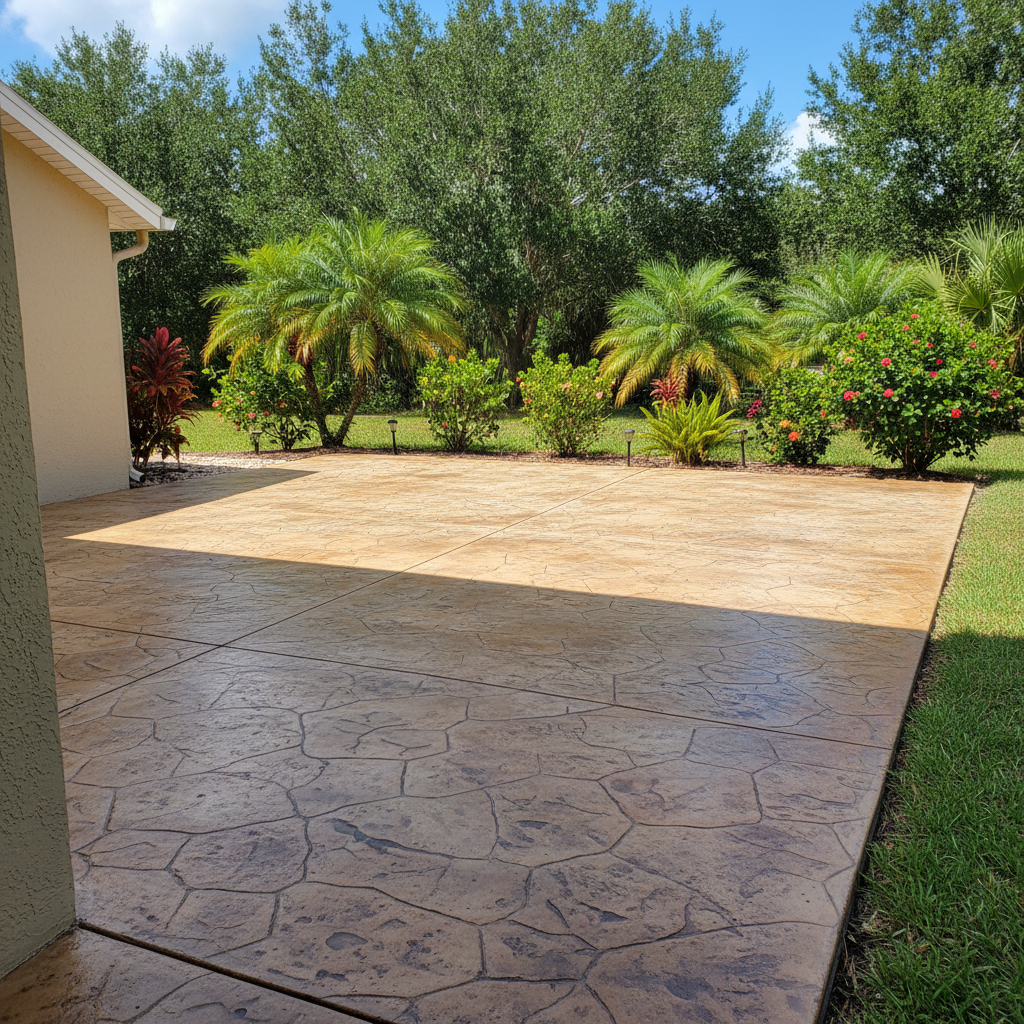
So, you've got stamped concrete around your place, right? Maybe a beautiful patio, a walkway, or even a driveway. It looks great, doesn't it? It's a fantastic way to add curb appeal and value without all the hassle and cost of natural stone. But just like anything else, it's not a 'set it and forget it' kind of deal, especially down here in Miramar where the sun and humidity can really do a number on things. I've seen plenty of stamped concrete jobs over the years – good ones and neglected ones – and I can tell you, a little bit of care goes a long, long way.
Making Your Stamped Concrete Last Longer
The biggest thing you can do to make your stamped concrete last is proper sealing. Think of the sealer as a shield, protecting the concrete from UV rays, moisture, stains, and general wear and tear. Down here, with our intense sun and torrential summer downpours, that sealer takes a beating. I usually recommend resealing every 2-3 years. If it's a high-traffic area, though, like a pool deck that gets constant sun and splashes, you might even consider doing it every year or two. How do you know it's time? Pour a little water on it. If it beads up nicely, your sealer's probably still doing its job. If it soaks in and darkens the concrete, well, it's definitely time to reseal.
Another big one is simply keeping it clean. Dirt, leaves, and organic matter can trap moisture and promote mildew growth, which isn't just ugly — it can also degrade the sealer over time. Use a leaf blower regularly to clear debris. For tougher spots, a soft-bristle brush and a mild detergent (nothing harsh like bleach or acid, please!) with water will usually do the trick. Pressure washing is okay, but be careful. Don't go too high with the PSI, and keep the nozzle moving. You don't want to blast away the sealer or, worse, etch the concrete itself. I'd say keep it under 1500 PSI for most residential stamped concrete, and always test a small, inconspicuous area first.
Regular Maintenance: What You Should Be Doing
Beyond resealing, your regular maintenance routine for stamped concrete isn't too complicated. It's mostly about keeping it tidy and watching for issues, really.
- Sweep or blow off debris: Do this weekly, especially if you have trees nearby. Those oak leaves and pine needles can stain if left too long, and our afternoon thunderstorms will just glue them down.
- Hose it down: A good rinse with a garden hose once a month helps wash away surface dirt and pollen.
- Spot clean spills immediately: Oil, grease, rust, or even spilled drinks can leave permanent marks if not cleaned quickly. The sealer helps, but it's not foolproof. A little dish soap and water often works wonders.
- Check for cracks: Do a visual inspection every few months. Small hairline cracks are pretty normal with concrete, but if you see anything widening or lifting, that's a red flag.
One thing I always tell folks in neighborhoods like SilverLakes or Monarch Lakes is to pay extra attention to areas near sprinklers. Hard water can leave mineral deposits that are tough to remove and can dull your finish. Adjust your sprinklers if you can, or clean those areas more frequently.
Warning Signs of Problems
You want to catch problems early, before they turn into big, expensive repairs. Here are some things to look out for:
- Fading color: If your stamped concrete is starting to look dull or the color isn't as vibrant as it used to be, that's a sure sign your sealer is breaking down and losing its UV protection.
- Flaking or peeling sealer: This means the sealer wasn't applied correctly, or it's just completely worn out. It's not just an aesthetic issue; it leaves your concrete vulnerable.
- Excessive cracking: While small hairline cracks are common, large, spiderweb cracks, or cracks that are getting wider, can indicate a deeper structural issue with the concrete slab or the ground underneath.
- White spots or haziness: This is often a sign of moisture trapped under the sealer, or efflorescence (salt deposits). It can happen if the concrete wasn't fully dry when sealed, or if there's a drainage problem.
- Pitting or spalling: These are small holes or flakes coming off the surface. This is serious and usually means the concrete itself is deteriorating, often due to water freezing and expanding (less common here, but can happen in rare cold snaps) or poor concrete mix quality.
When to Call a Professional
Look, I'm all for DIY, but some jobs are best left to the pros. If you see any of those serious warning signs like extensive cracking, pitting, or widespread peeling, don't try to fix it yourself with a can of sealer. You could make it worse. If you're unsure about the type of sealer to use, or how to properly prep the surface for resealing, it's better to get a professional opinion.
Sometimes, a simple cleaning and resealing is all you need, and we can handle that quickly and efficiently. But if there are structural issues, significant damage, or if you're dealing with stubborn stains you can't remove, give us a call at Miramar Concrete Co. We've got the experience and the right tools to assess the situation properly and get your stamped concrete looking its best again. We'll give you an honest assessment and a clear plan. Don't wait until a small problem turns into a major headache!